How factoring works
You deliver a load and send the paperwork to a factoring company. It pays you most or all of the invoice within a day or two, minus a fee, then collects from the broker. Many factors also check broker credit before you book.
Recourse factoring
If the broker doesn't pay within an agreed time, you must buy the invoice back or swap it for another one. Fees are usually lower because you carry the risk.
Non-recourse factoring
The factor takes the loss if a broker doesn't pay, but usually only when the broker is insolvent or goes out of business. Disputes over damage or shortages usually still fall on you. Fees are higher.
What it really costs
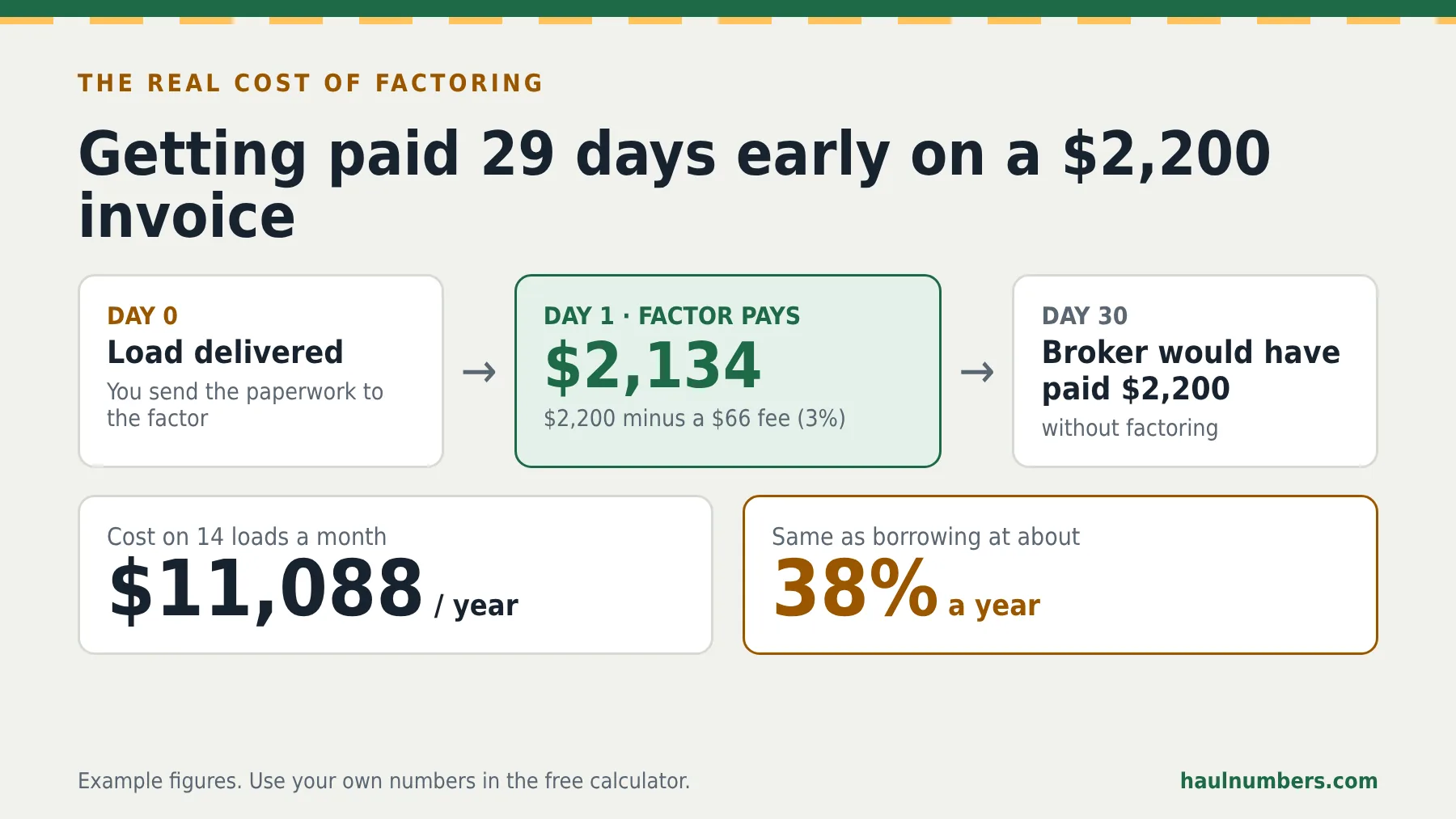
A 3% fee sounds small. On $2,200 invoices and 14 loads a month, it's about $11,000 a year. If the broker would have paid in 30 days, that's like borrowing at roughly 38% a year. Put your own numbers into the factoring calculator.
When factoring makes sense
- You're a new authority and need cash for fuel and insurance before brokers pay.
- You want the factor's broker credit checks.
- You don't want to chase payments yourself.
Contract terms to check
- Monthly minimums and volume requirements
- Whether you must factor all invoices
- ACH, wire and fuel-advance fees
- Contract length and termination fees
- Reserve holdbacks and when they are released
Count the factoring fee in your break-even. The load profit calculator subtracts fees from every load automatically.
Common questions
Is non-recourse factoring worth the higher fee?
It protects you mainly against broker insolvency, not disputes. Compare the extra cost with how much credit risk you take on.
What is a normal factoring rate?
Roughly 1.5% to 5% per invoice, depending on volume and terms.